

The Volkswagen Passat I borrowed from my brother glides smoothly along the motorway. No clouds are tainting the blue sky; it’s a perfect summer’s day, almost a shame to spend hours driving 300 kilometres West across the country.
I arrive at one o’clock after riding along some narrow and bumpy roads through the dry fields. On the horizon, I can already spot the white tents of Paléo Festival in Nyon, near Geneva. And as I prepare my makeshift bed in the back of the car, I already feel the exhaustion from the mediocre sleep I’ll get.
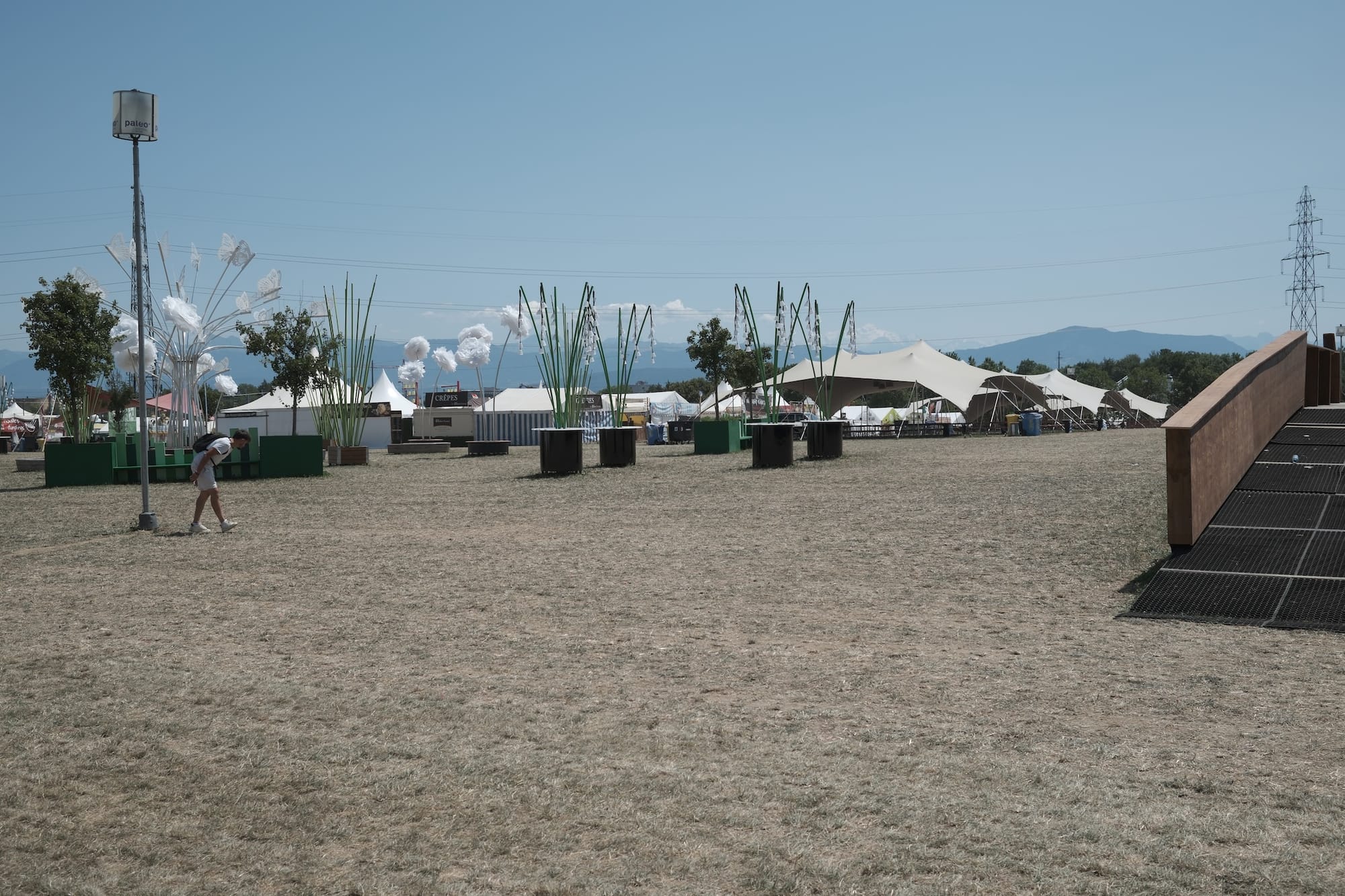
The festival grounds are still closed, but my red media wristband gives me access anyway. I wander around the vast area between the art installations, food and merch stalls (also still closed), and bars (sadly also still closed). It’s empty; a calmness looms over the space, but the ground already shakes from the soundcheck of Bound by Endogamy.
After taking a significant detour, I finally discover the media area. Reporters and staff are already buzzing, plugged into their headphones and laptops while I scribble my notes into a notebook. Oldschool. I order a small beer from the bar. Sylvie Kreusch is giving interviews at the next table.
Paléo is Switzerland’s largest festival, attracting around 250’000 visitors across six days. An award-winning event. But in the German-speaking part of Switzerland, where I live, nobody comes here. Only around 5% of the visitors are from there, the festival representatives said at a press briefing back in March at the m4music Festival. Maybe it’s the travel, maybe the fact that the festival usually sells out in minutes.
At 3.30 pm, the festival officially opens its arched entrance for the day, immediately breathing life into the stalls and bars. Time to grab a burger for a late lunch burger. The sun is now blazing. I climb up “La Belvédère”, a multi-story gallery with great views of the “Grande Scène”, the main stage. Some hardcore fans are already camping out in the first row; they have to endure a couple more hours.
Then, I finally make the first great decision of the day: Checking out Nonante’s show. The Lausanne-based band fuses post-punk, coldwave, and indie rock into something absolutely captivating. How have I not heard of them before?! I damn the “Röstigraben”, the invisible border between the German and French parts of Switzerland.
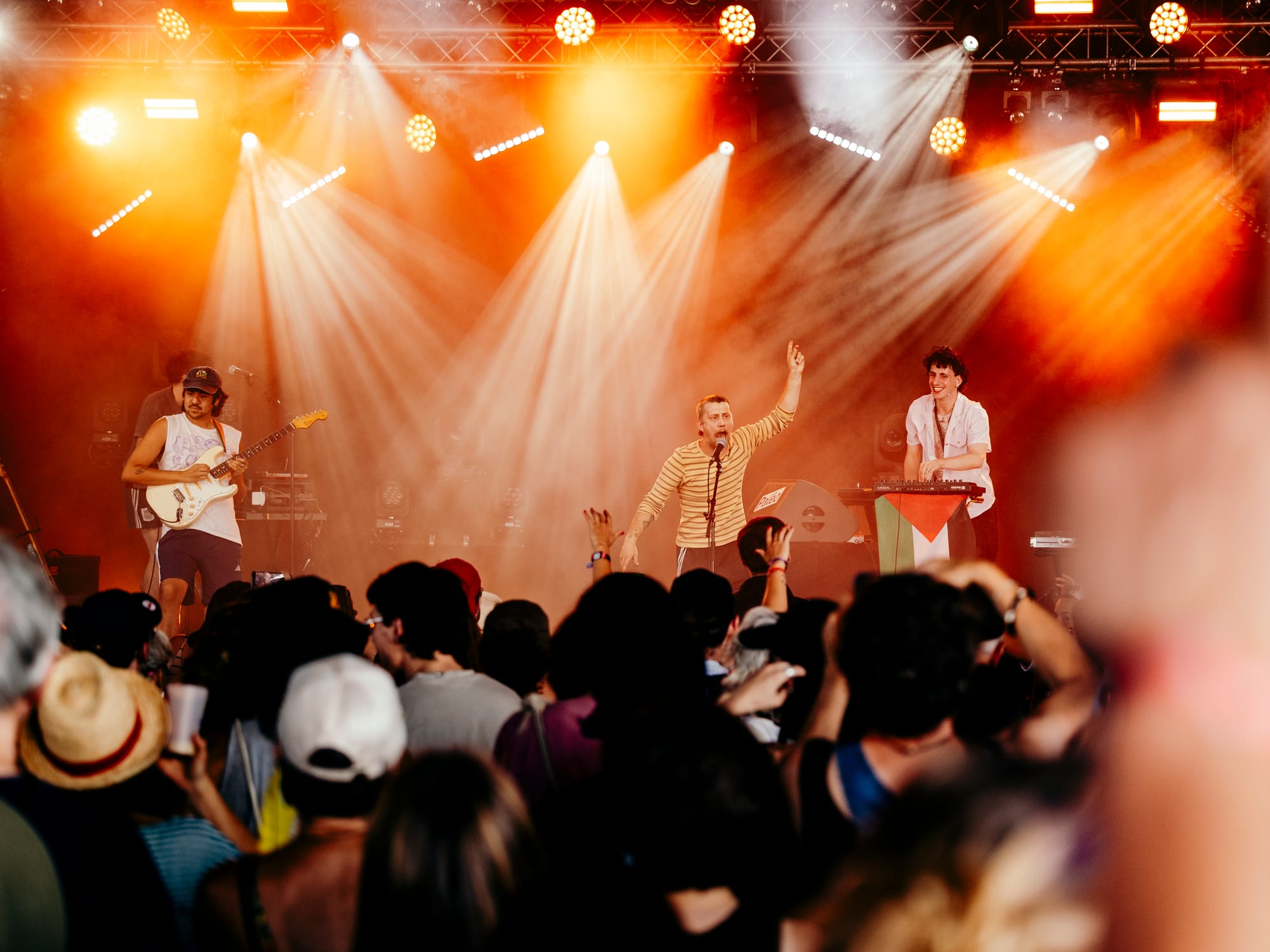
They light the stage with their fiery passion. There’s kinetic energy unleashed that their recordings can’t physically produce. Singer Nicolas Roussi dances maniacally, eyes wide open, conjuring the audience’s ecstasy. The drum machine relentlessly whipping your legs: Dance, baby, dance for me. If Paléo, for some reason (storm, power outage, alien invasion), had to cancel the rest of the day, I would still be happy having seen this ravaging performance. And I already know that Bank Robber will be stuck in my head for weeks.
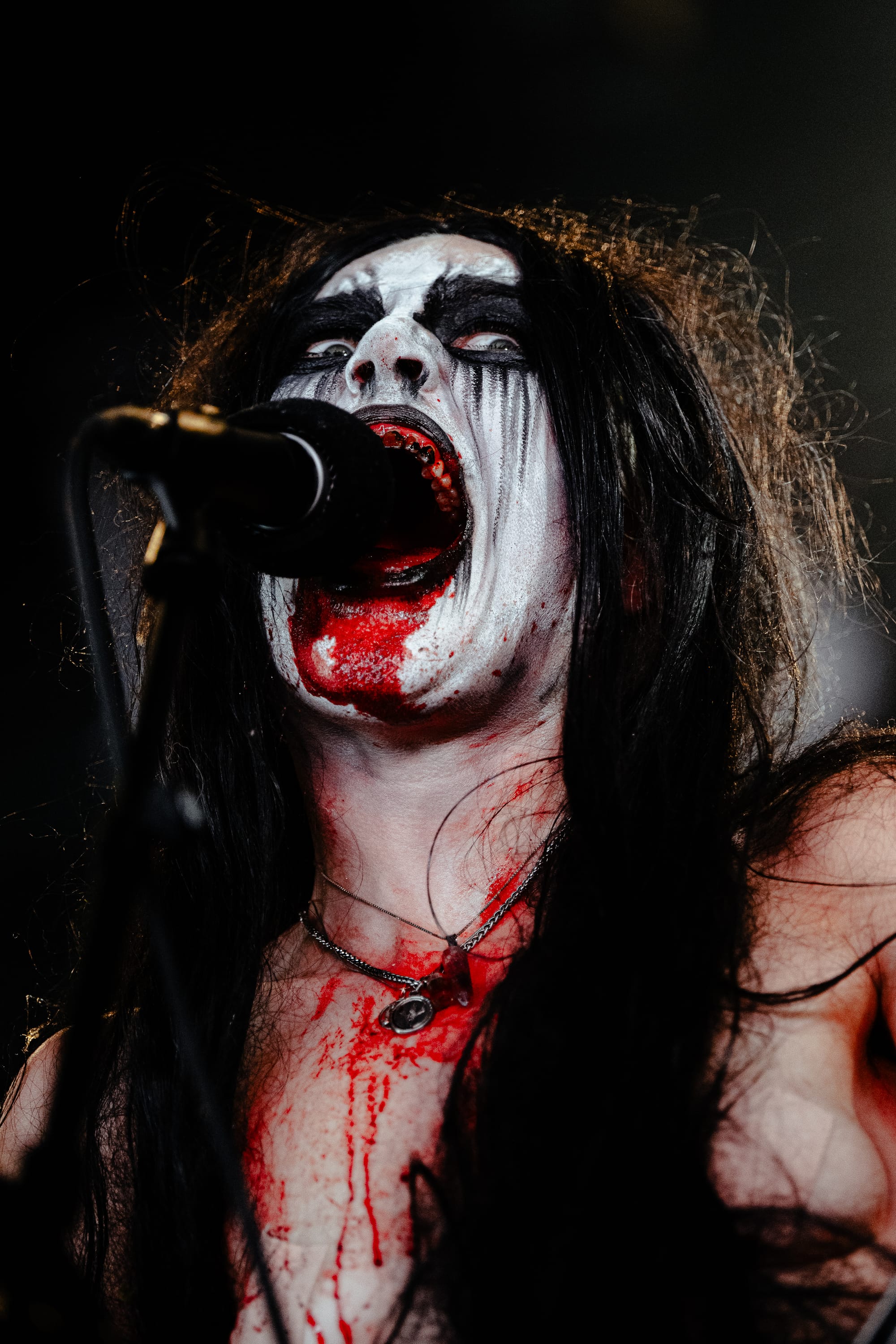
I switch stages to stomp in step with Bound by Endogamy’s monotone but earthshattering EBM beats for a while, only to run off to the next gig, which is not only opposite the festival site but also sonically a wholly different beast: Witch Club Satan. Radical, feminist avant-garde black metal that propels an already theatrical genre into new spheres. Oh, you should’ve seen my joy looking at the disturbed people’s faces once they stripped off their clothes and started blasting the gnarliest black metal sound. As the people turned around to leave, you could see disbelief, shock, and disgust. I could’ve watched that all night.
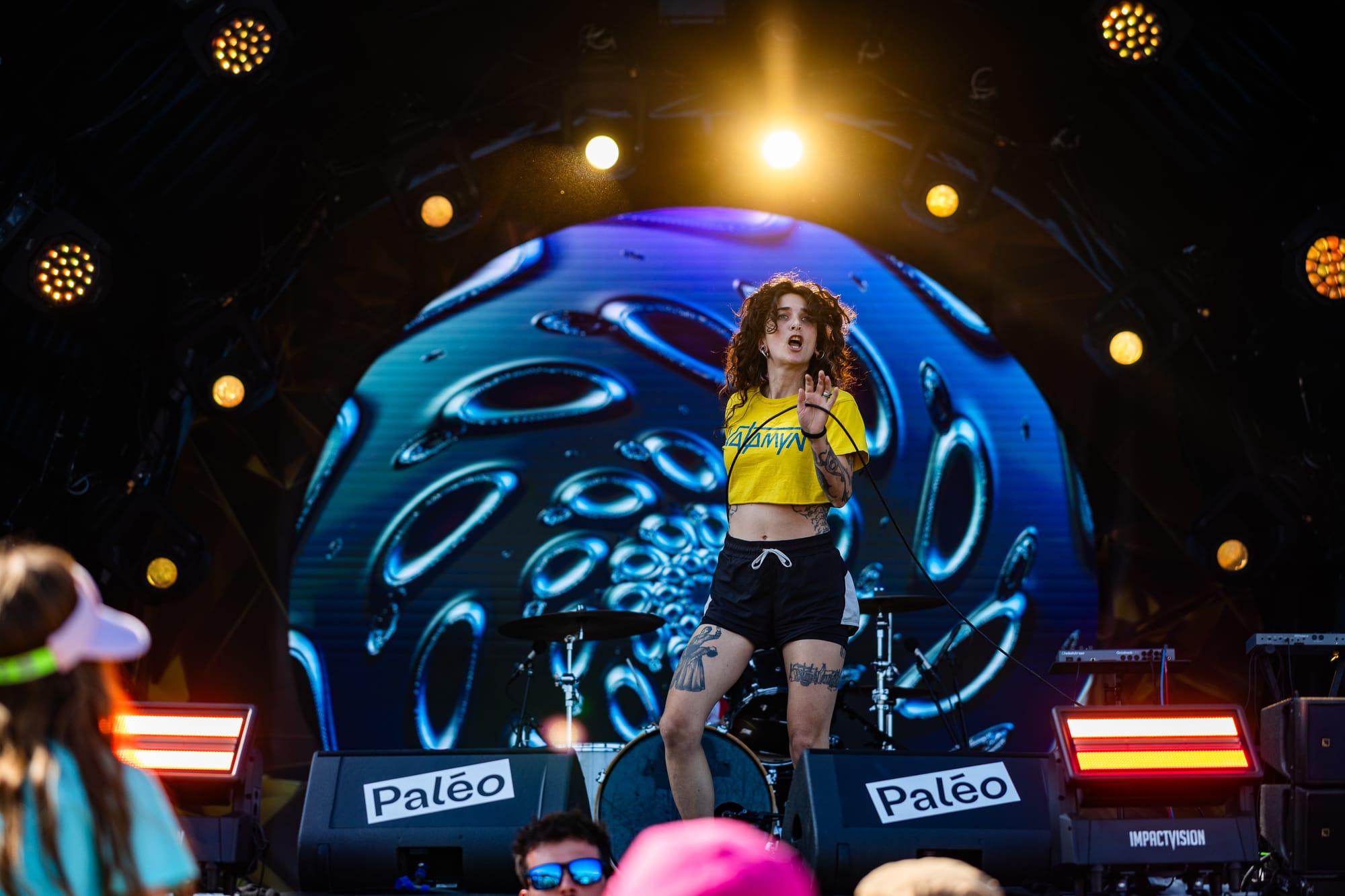
A seemingly endless stream of people flows into Paléo. I’m tired, the skin sticky from sweat and sunscreen, in dire need of a break. And some water splashed all over. And I’m not really looking forward to the massive crowd awaiting me when The Cure takes the stage as the evening’s headliner. But I guess I owe it to myself. Let me tell you an embarrassing story:
On November 19, 2022, The Cure played in Switzerland. I bought my ticket months in advance and pinned it above my desk. However, I’d entered the concert into my calendar on the 20th instead of the 19th, and I only found out when I saw everyone’s Instagram stories before going to bed. You can’t imagine how disappointed and rightfully angry I was with myself.
I really got into The Cure around 2008, first with 1985’s The Head On The Door, then expanding to the full discography. I still can’t quite pinpoint their attraction. But their music always soothes me in a way no other band could this consistently. Whether they dive depressingly deep into Weltschmerz and heartache or dance airily on cushions of love, I feel seen.
I also harbour an unpopular opinion with my love for Bloodflowers. When I was expelled from high school in 2009, I used to roam aimlessly through the streets of Zurich, and this album was on repeat as I felt sorry for myself.
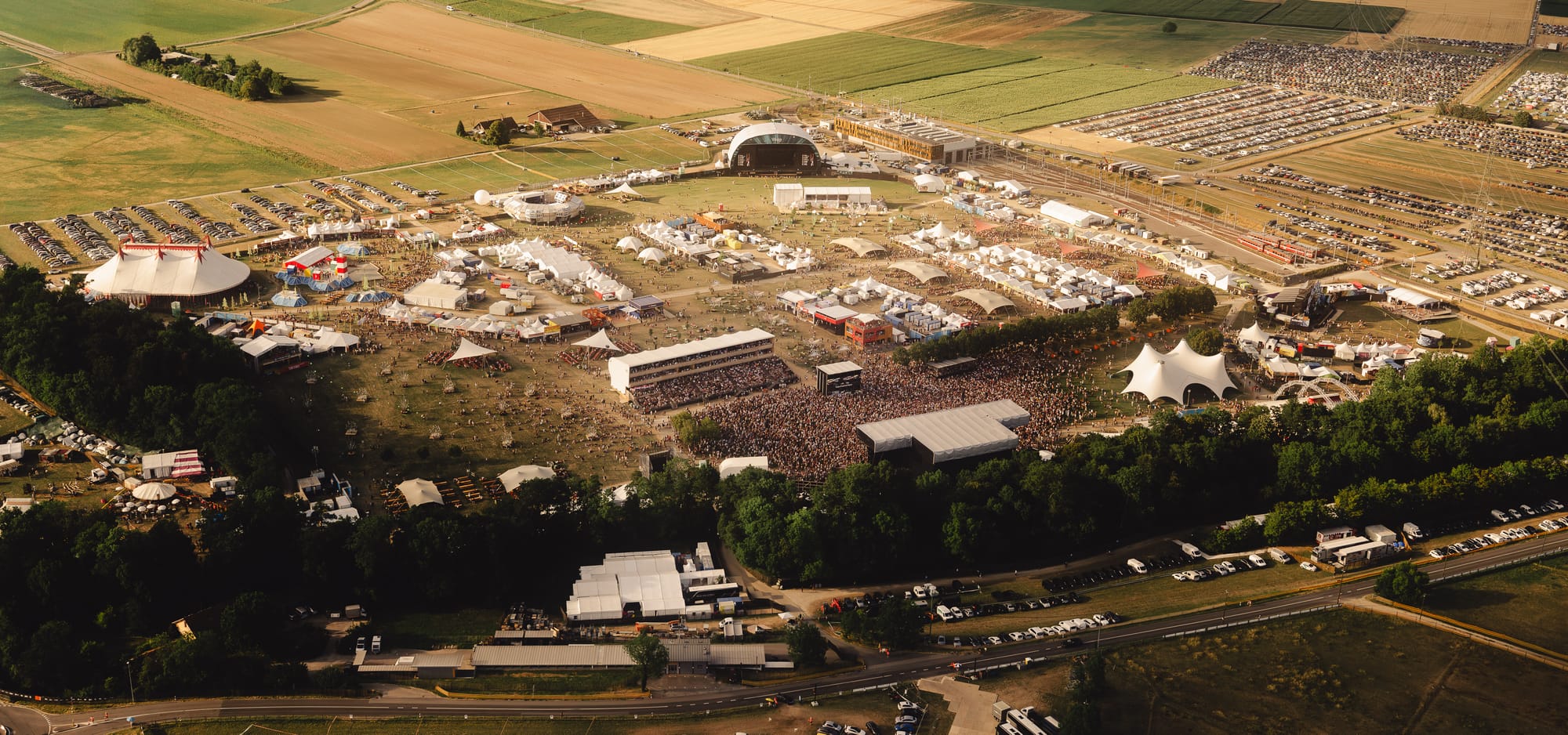
Back at Paléo, I retreat to the media area once more to escape the people for a while. A cool beer in the deckchair, while the hard beats of Zaatar push through the trees and up the small hill. The sun slowly begins to set. And so does my phone’s battery. Need to charge because I need to please the sweet, sweet Insta algo even more. Time for another beer.
I’m trying to identify what makes Paléo really stand out. I mean, yes, they were anointed as the best European festival in 2025. The infrastructure is everything you’d want: free water stations, cooling mist sprays, free sunscreen, seating, shade. Real toilets, and I never saw a dirty one. But how does Europe’s best festival feel?
Well, it feels like a gathering of friends. Naturally not true, but everybody seems to know everybody. Because people come here every year. It’s a ritual, a community built over 49 editions now. The vibe: relaxed but excited. You can feel what they call in French “savoir vivre”, an appreciation of a good time. A joy for live music. No stress, no annoying anxiousness that I’ve encountered countless times in other places. Maybe the Romands are just the better Swiss.
I need to kick back into action. Let’s hunt down some dinner.
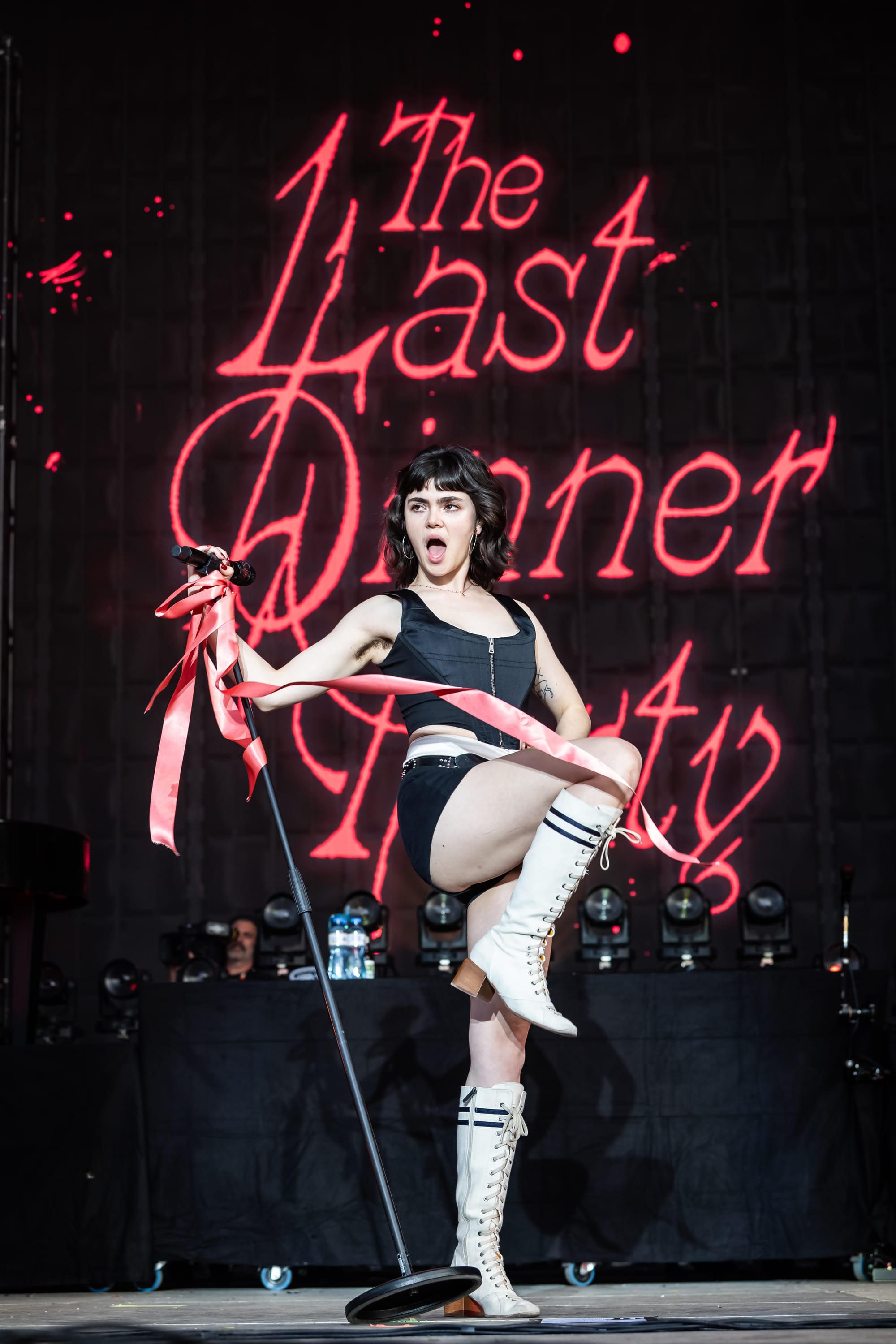
After some good meatballs paired with subpar fries, I check in with The Last Dinner Party. No doubt: they’ve tapped into a vibe with their vintage-coated rock music. It’s their second gig in Switzerland after they played The Hall back in February. I can see why their melodic appeal, played virtuously and with a healthy dose of show, draws a significant crowd. But despite their cheeky charm, the music’s too polished, lacking an edge. A bit more punk instead of pop would go a long way.
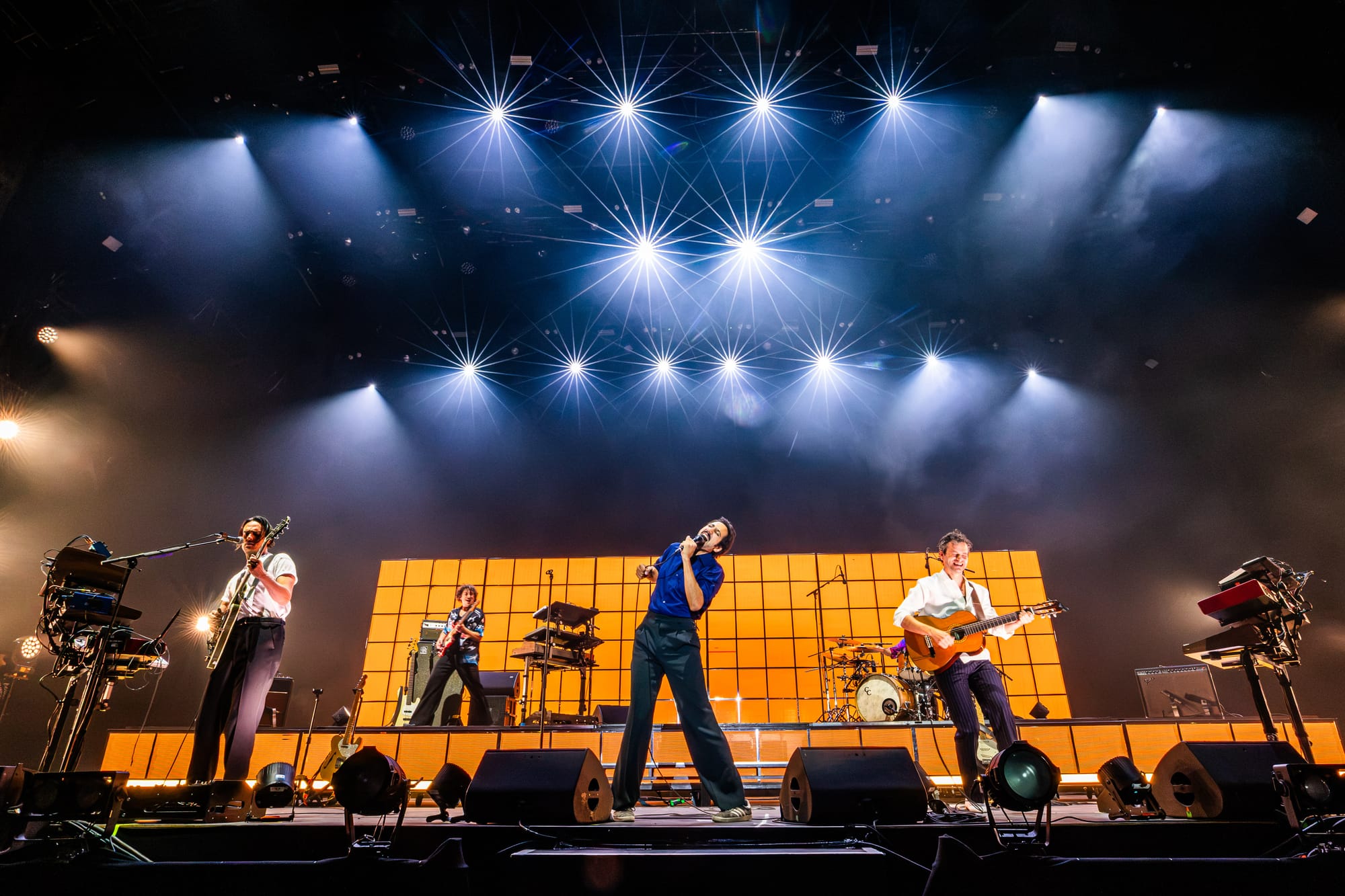
Later, the Parisian band Feu! Chatterton blends progressive rock, pop, disco, and the traditional French chanson into something with irresistible groove and flamboyance. And despite my utter lack of Chanson education to truly understand what they create, I still get caught for a moment by their seductive swagger.
The wind picks up, stirring up the dust on the ground. Half an hour to go. I sit together with thousands on the slight slope, creating a natural arena in front of the “Grande Scène”. Then, after a lengthy intro of rain and thunderstorm sounds, The Cure enter the stage. Finally, I can correct my mistake from a couple of years ago.
Obviously I’ve no clue whether this was a great, good, okay, or bad performance. If it weren‘t for my stupidity, I‘d have at least one reference point. But what kind of devil’s pact has Robert Smith signed?! How does his voice still sound like he’s just time-travelled from the 80s?
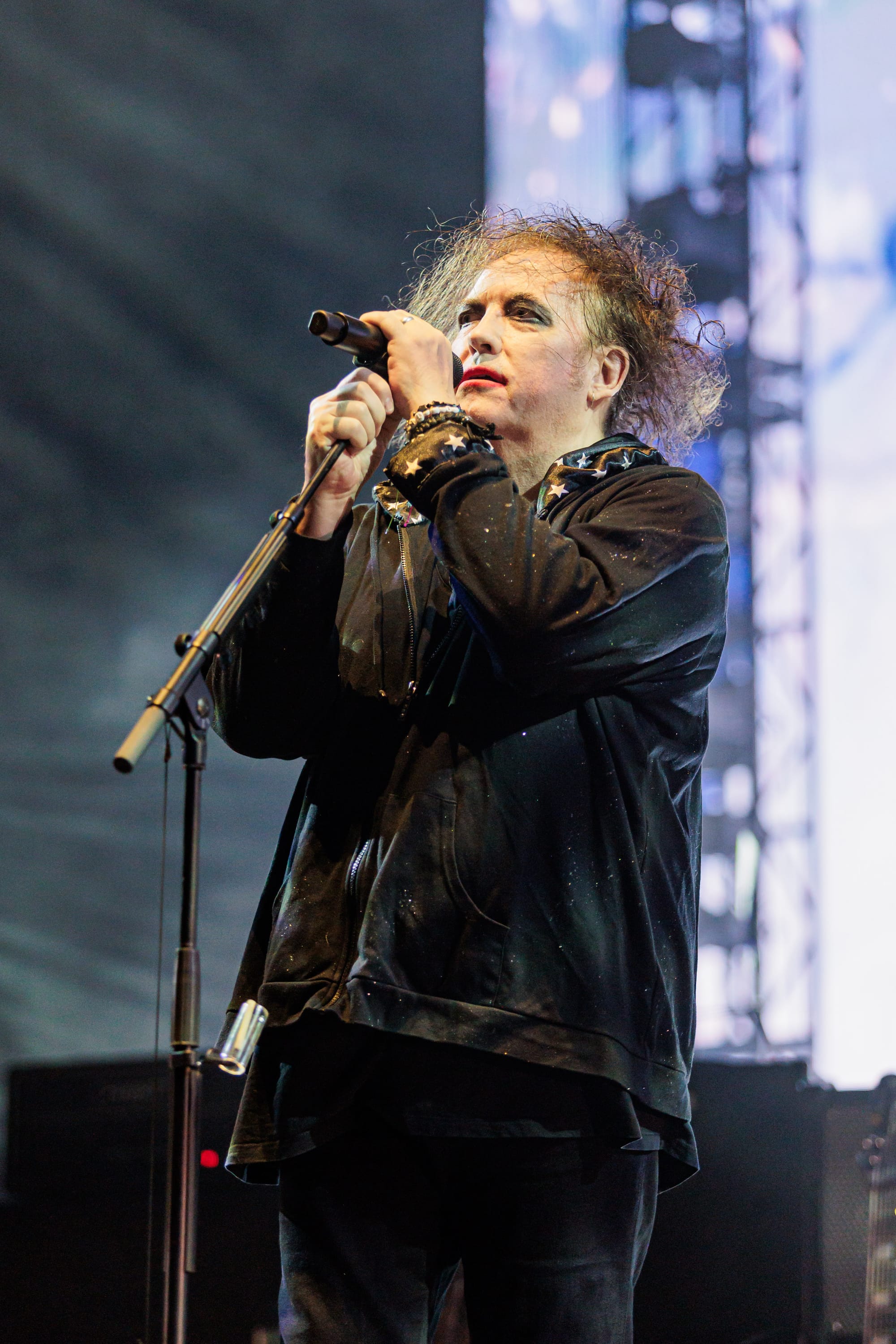
Without any fuss, these old gentlemen take their places on stage and hardly move from them. No grand speeches, no special-effects frippery. The Cure play practically non-stop, stringing one classic after another. 24 of them, for a full two hours.
And just as unhurried as the band, so too is the audience. Perhaps it’s down to the average age, or perhaps simply down to the music: rarely does the euphoria manifest itself physically, in clapping along, singing along or wild cheering. It seems as though The Cure are lulling themselves and their fans into a meditative trance, enveloped in velvety melancholy.
But every now and then, the audience does break out of its reverie. When the first notes of the truly massive hits ring out, the crowd is swept up in ecstasy, flooded with endorphins. A Forest, Lullaby, and of course Friday I’m In Love and Boys Don’t Cry.
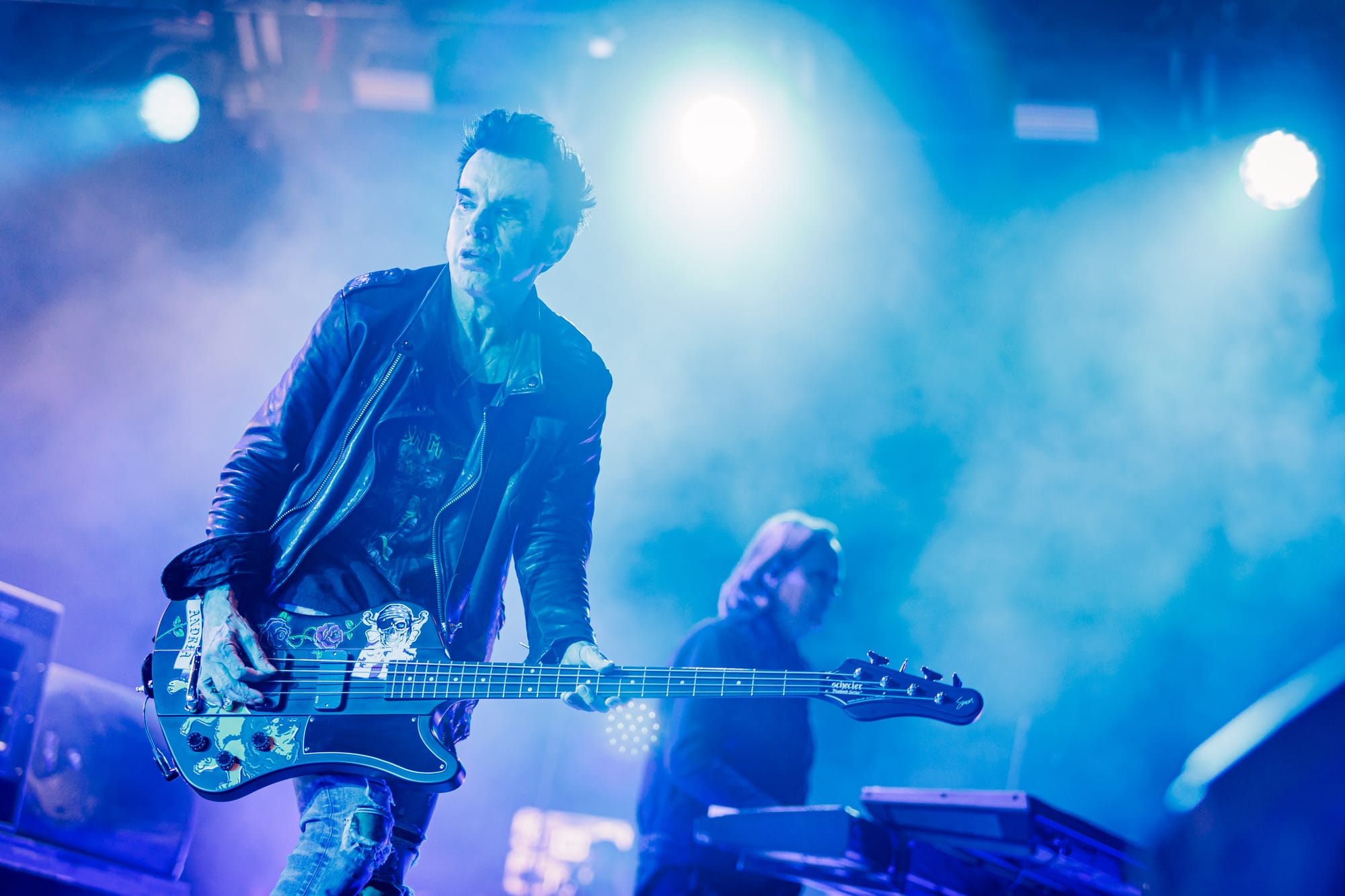
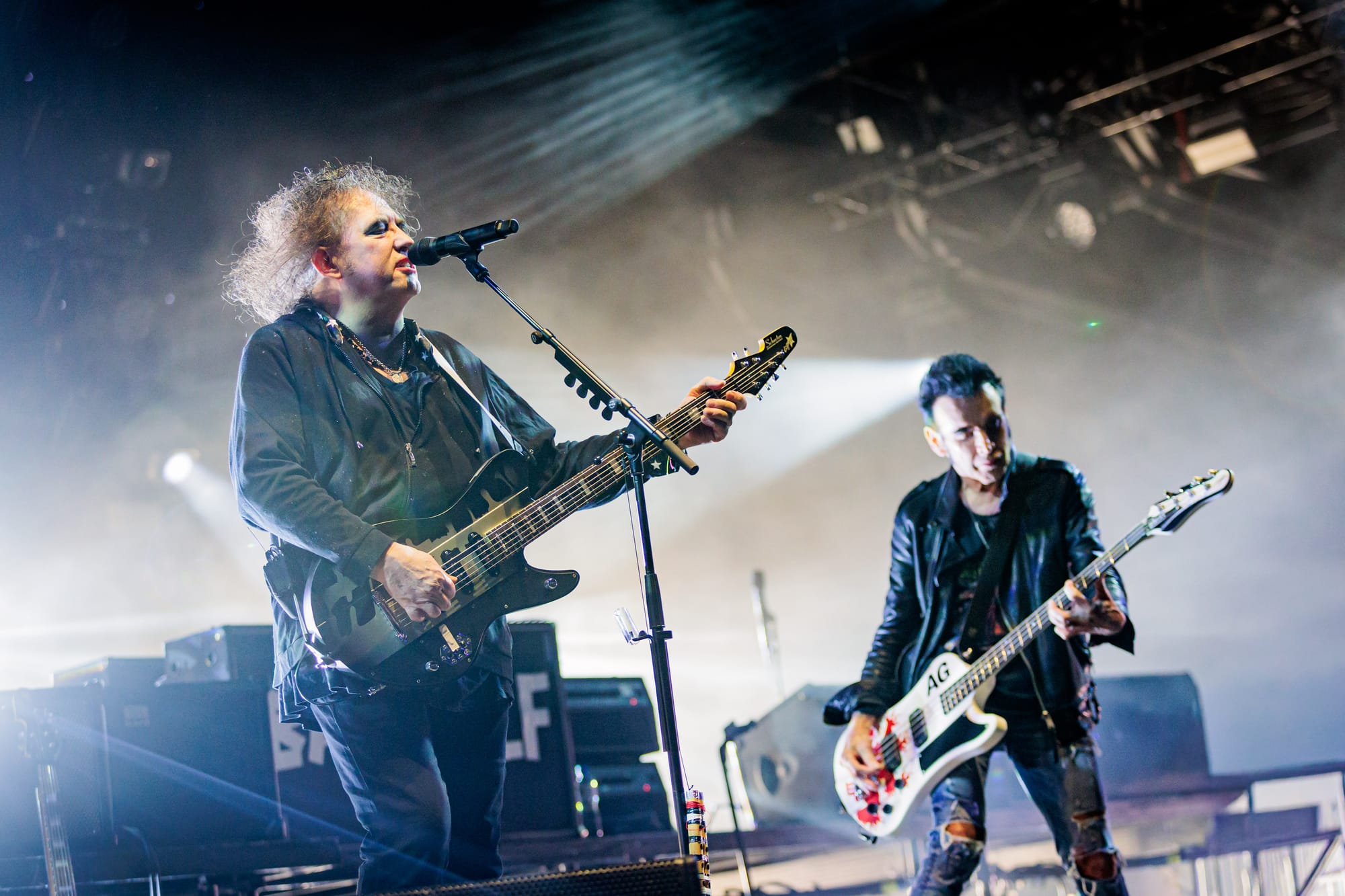
Credits: Ludwig Wallendorff/Paléo
For a brief moment, I wonder: is this frantic pace really still necessary? Do The Cure have to cram as many hits as possible into a set? But then I remember that they’ve been playing a slightly different set at every concert this summer. This isn’t just a best of set, as Disintegration was missing from the setlist that evening. Somehow, The Cure still seem keen to prove themselves, but they certainly don’t want to leave anyone in any doubt as to whether the concert was worth it.
As the final song before the encore, the band strikes up Endsong. This massive, powerful track from the 2024 album Songs Of A Lost World provides the perfect soundtrack for a crumbling world. Full of anticipation, I stare spellbound at the stage, waiting for that magnificent guitar siren, that sheer force. But The Cure completely mess up the song. The artfully layered elements, which build into an ever denser and more opulent composition, crumble into chaos due to poor timing. It was to remain the only—albeit regrettable—flaw in the show.
As Robert Smith basks in the cheers and applause after the final song, my battery is depleted. Partly because The Cure just hammered me with two hours of persistent intensity, partly because while a slight incline is great for visibility, standing and dancing on it for two hours not so much. Now, after the show concluded, I feel my back aching, poking me with sharp needles to lie down... in the back of my brother’s Volkswagen Passat on a thin sleeping mat. Oh well.
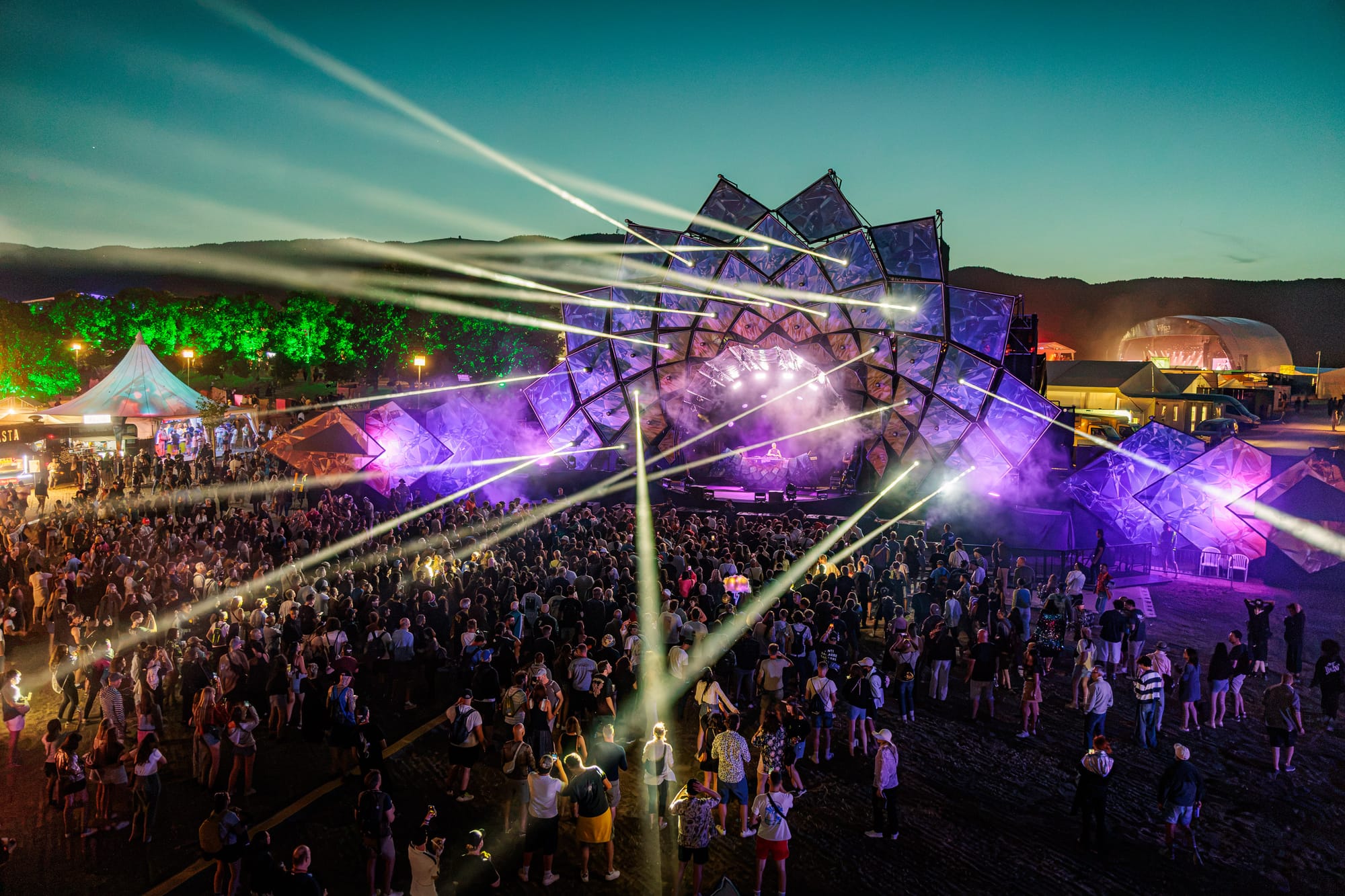
5 am, the dawn wakes me, but I pull the sleeping bag over my head. Two hours later, I‘m packing everything up. Exhausted, yes, but mostly sad that I’m already leaving again.
Because for two hours, no, strike that, for the whole day, Paléo offered an escape from an even more exhausting reality that seems too eager to hit us with ever more uncertainty. Not even heat, sweat, and the discomfort of sleeping in the car could detract from all that. A festival might not be wellness for the body, but it definitely is for the soul—especially with The Cure and their sense of shared Weltschmerz.


