
Here‘s a short one. I‘m currently in Bilbao, Spain. On the surface, it's a city that lives off one cultural institution: the Guggenheim Museum. That’s why tourists come and visit this small, picturesque city nestled between the hills.
After the industrial sector collapsed, the city and the region made a deliberate effort to bring the Guggenheim to Bilbao. A transition from factories to cultural tourism. And it worked: more than a million people visit the museum every year.
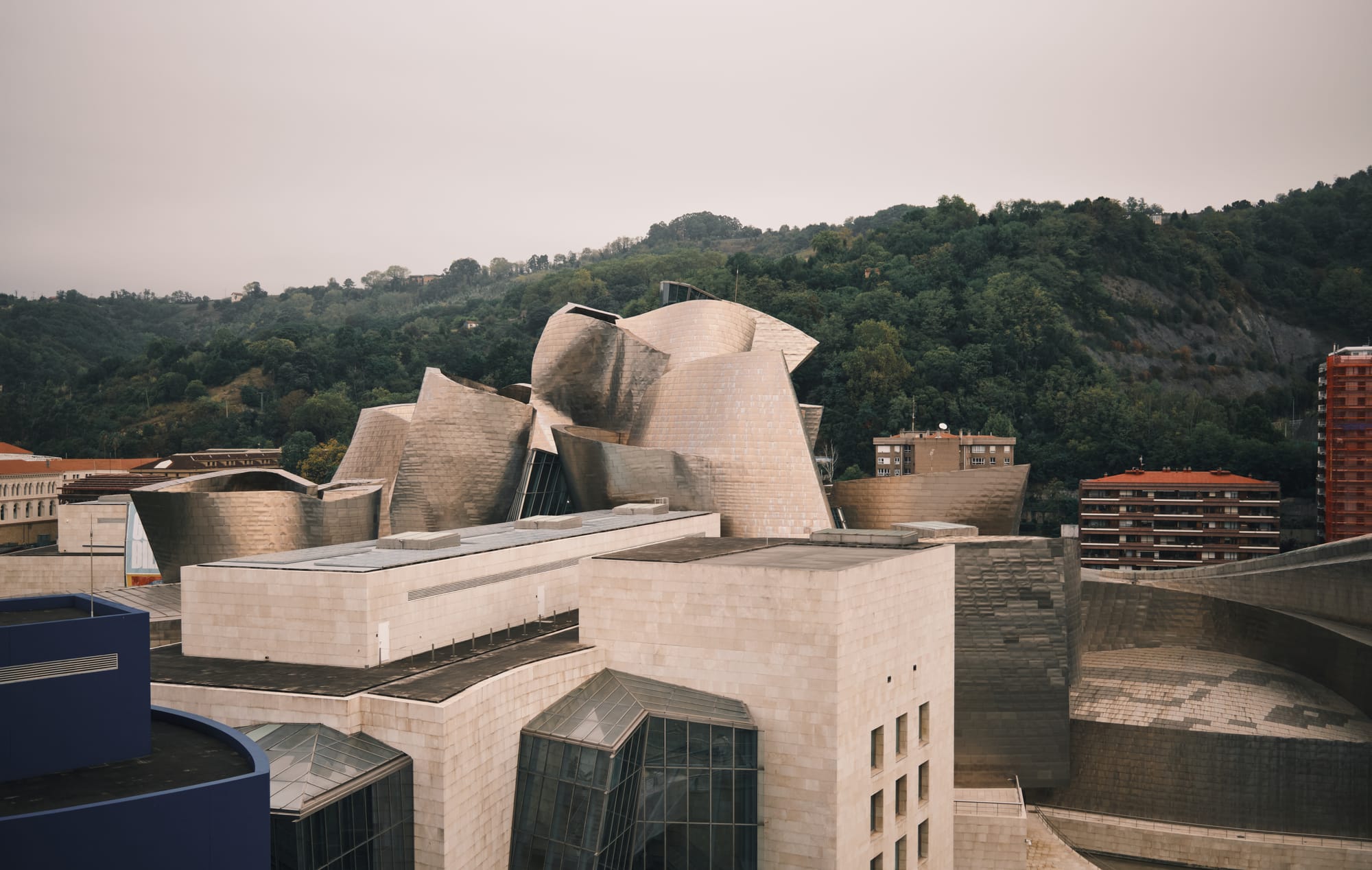
There are nasty side effects, of course: a protest camp against the shortage of affordable housing currently occupies the space in front of the Arriaga Theatre. Tourism, gentrification—all connected to the so-called „Bilbao Effect“ that transformed the city. On top of that, local artists couldn't profit as much as they hoped.
Nevertheless, I find it fascinating that art still has such an impactful pull.
We already know the model works for music too, just in a more concentrated form. For example, Roskilde, a Danish town of 50,000 that quadruples in size for one week every summer because of a festival. Or the Swiss lakeside town of Montreux, whose name is inseparable from its jazz festival. These are cities people plan trips around because of music. And for a year-round valid argument, we could also look at Berlin‘s club culture (which has been under distress lately for the same gentrification reasons).
So I keep wondering what a city that commits to live music would look like: small to large stages with stylistic diversity. Would it pay the same price as Bilbao?
P.S. Good news: the Weekly5 Jukebox now covers the complete catalogue with all songs from 2023–2026, and every track carries the words written when it was first featured. Five+ years, and some handy sorting and discovery features. Happy exploring!


