


Algorithm Culture is our first prototype of a physical zine, featuring three heavily updated and edited essays on the relationship of music and culture in an era of AI and digitisation. The 20-page zine is illustrated with gripping photos, shot by our resident photographer Evelyn Kutschera, perfectly matching the zine's DIY aesthetic.
The statistics on the recorded music market in Switzerland may trick you into thinking that there’s nothing to worry about. Well, not you specifically, but a general audience with little insight into the industry’s inner workings.
It’s a stunning contrast: The music market has been growing over the last decade, while the local music ecosystem seems to stare into an abyss. Clubs are shutting down, agencies as well, and artists struggle not only financially but often mentally, too.
In 2025, events hosted by SMPA members generated approximately 311 million. Recorded music brought in 259 million. Combined, half a billion Swiss Francs in revenue, yet the grassroots are drying up and dying. The money mainly flows upwards or outwards. So, it’s all fine if you’re at the top. Nothing to worry about.

Headlines
Swiss Music Market Continues Growth
In 2025, the market for recorded music in Switzerland racked up 259 million Swiss Francs—an increase of 4 per cent compared to the year prior, as the record label association IFPI’s local subsidiary communicated. Overall marks 2025 a decade of sustained growth after hitting rock bottom in 2015.
- What drives the growth: Major contributer remains digital streaming, accounting for CHF 237 mio, while unsurprisingly, CDs are down another 13%. Meanwhile, vinyl rose by 19% to 5,1 mio in revenue, marking the first increase in sales since 2021.
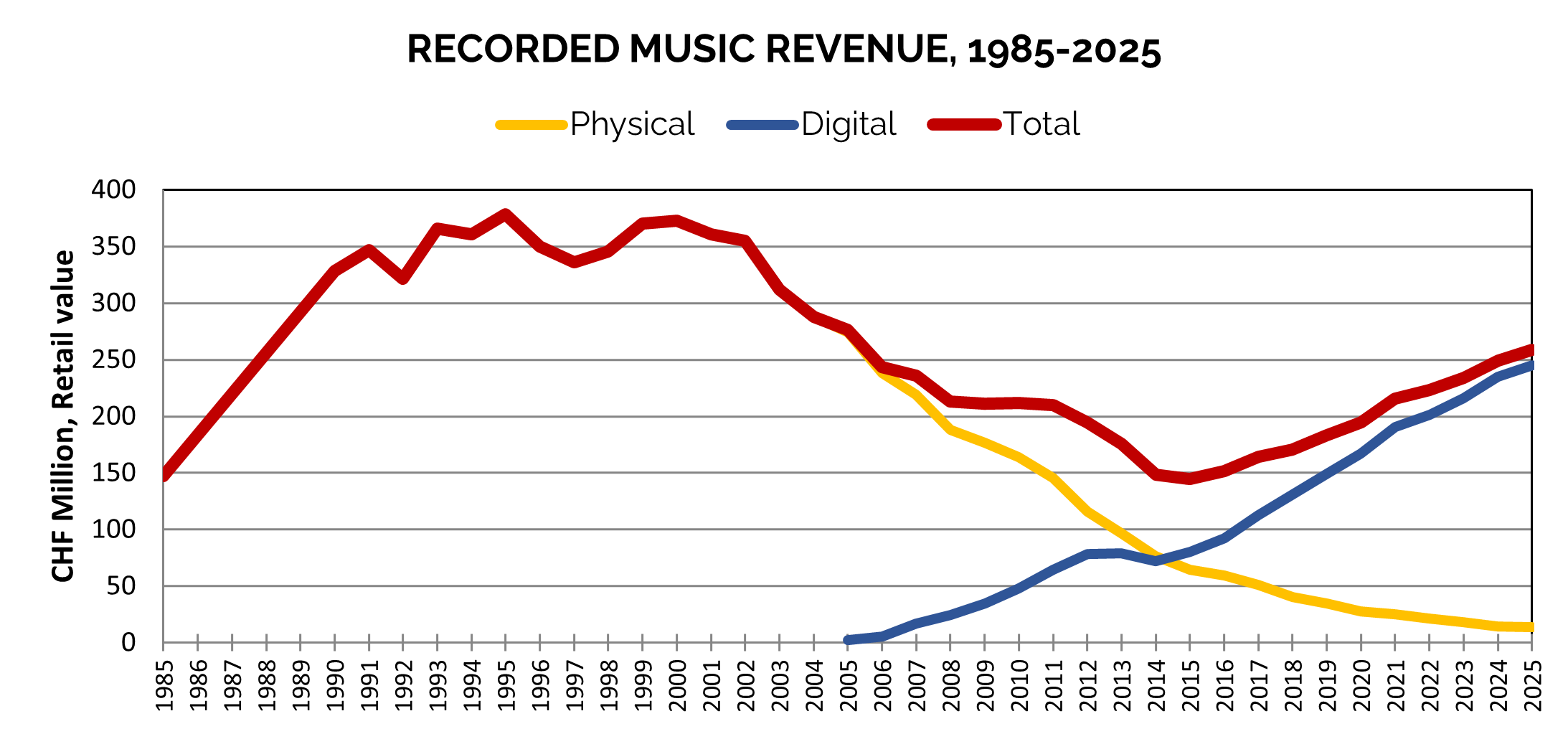
- IFPI’s perspective: Managing director Lorenz Haas is quoted: “The music industry has proved to be highly resilient and has consolidated its role as a pioneer in the technological development of the cultural sector. In recent years, new revenue streams from social media have emerged, and over the past twelve months or so, numerous music labels have begun to enter into licensing agreements for AI uses. […] The future remains challenging, but our industry has every reason to look forward to it with optimism.”
- Reality Check: Although IFPI Switzerland members include more indie-focused labels, the majors Sony, Warner, and Universal are the key players. And the digital economics of streaming overwhelmingly benefit the top artists and their labels, redistributing revenue from the bottom upwards, resulting in systemic problems at the grassroots level—from starving artists to struggling venues. These issues signal that the music market‘s success is rather consolidating at the top than trickling down to the broader local ecosystem, mirroring widening wealth gaps in society at large.
- A word on AI: Striking licensing deals with AI companies remains an option for major labels with extensive catalogues. However, it’ll probably prove to be another Trojan horse, further siphoning revenue from the industry to tech with no benefits to the local music scene. Furthermore, the fact that majors rush to close licensing deals shows little care for music as a human art and a glaring lack of strategic vision, because in a future with mostly artificially generated music, there’s no need for tanker-sized corporations like major labels.
PETZI launches Awareness Campaign
Following the publication of their manifesto for a sustainable non-profit live music ecosystem, PETZI announced the launch of a campaign to raise awareness on the myriad of challenges faced by its members.
- Why it matters: Non-profit and independent music clubs are struggling while the public largely remains oblivious to the underlying factors. Educating a wider audience on these challenges is a necessary foundation for further action.
- What’s next: The discussion around a Grassroots Levy intensifies in Switzerland as well. The awareness campaign could be a good precursor to a more concrete political proposal.