We live in an age of abundance that is increasingly tipping over into overload. More and more music is being released, making it impossible to keep up with everything. The flood of content often leads to sensationalism. My argument is that this is entirely the wrong approach for promoting towards music journalism publications.
I would like to take a closer look at promotion through the eyes of a recipient, and with a good dose of bias. But also with 15 years of experience in this role under my belt.
At Negative White, we receive well over 200 promotional emails every week, ranging from new songs, EPs, and albums to news and product launches. And that’s only a fraction of what’s buzzing around the web. The top priority for me—especially given that this is voluntary work—is efficiency: quickly grasping what it’s all about. Quickly recognising whether it’s relevant.
So, here I will dissect a promotional email and highlight the essential points from my perspective. Learn about the best practices for the email subject lines, content, electronic press kits, and summary formats. And why you should curate your recipients.
Email Subject
- Artist name
- Release name
- Release type (Single, album, EP)
- Release date
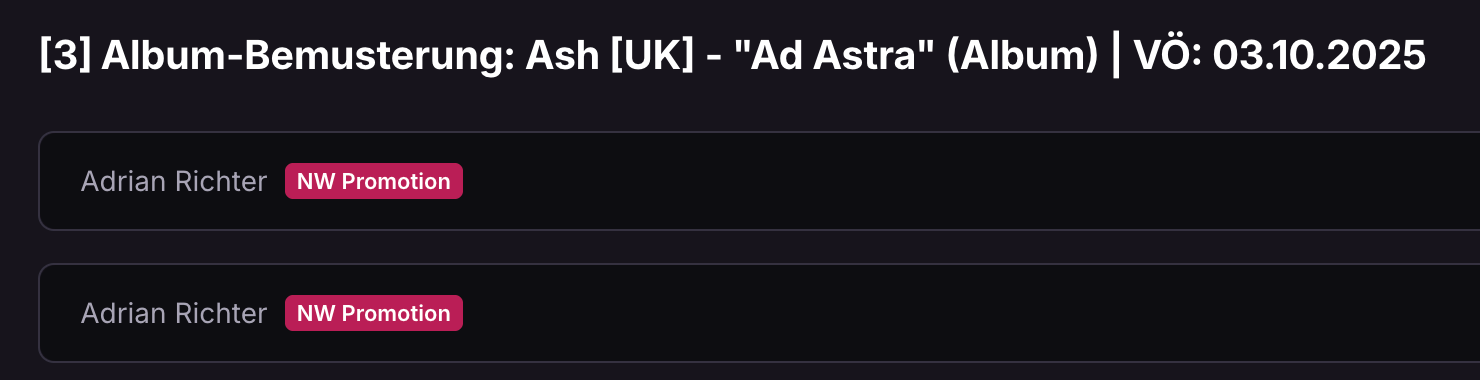
Accordingly, the subject line must be concise, presenting the most critical information in a dry, brief manner. There is no need for an exciting headline or adjectives, just clarity.
Here are some positive examples:



Email Body
- Short text
- Links to streaming options (if already released)
- Link to EPK
- Contact details
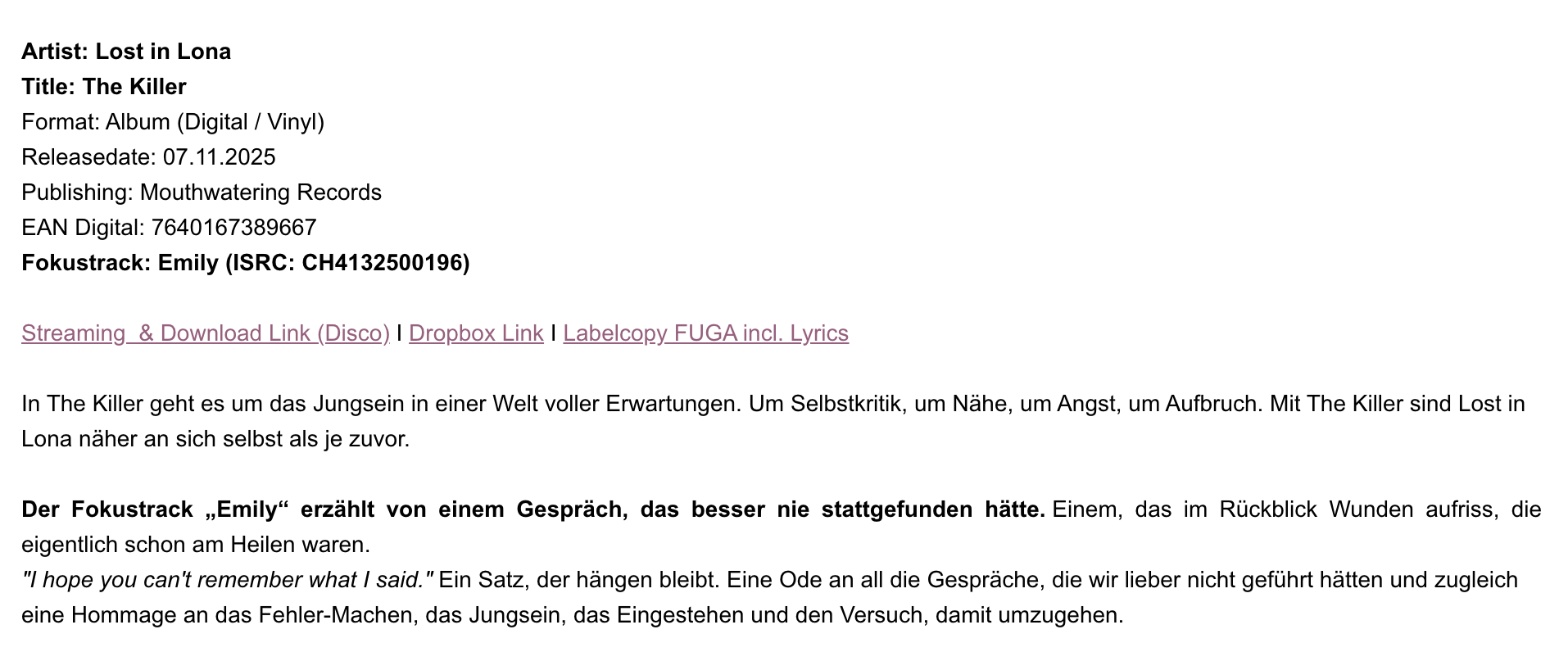
The email itself should also be kept concise. A short introduction to the music being promoted is sufficient. The language can be more colourful here, but you shouldn’t overdo it; instead, let the music speak for itself. More critical are clearly communicated links to more detailed information in an electronic press kit (EPK).
Also, pay attention to the layout, whether you use a newsletter tool or send the email directly from your inbox. I have received some extremely ugly and basically unreadable emails.
Here are some positive examples:

Electronic Press Kit
- Song files with decent file names
- Artwork
- Photos (with credits, please!)
- Extended promo text
- Video material (if appropriate, to create Reels/TikToks)
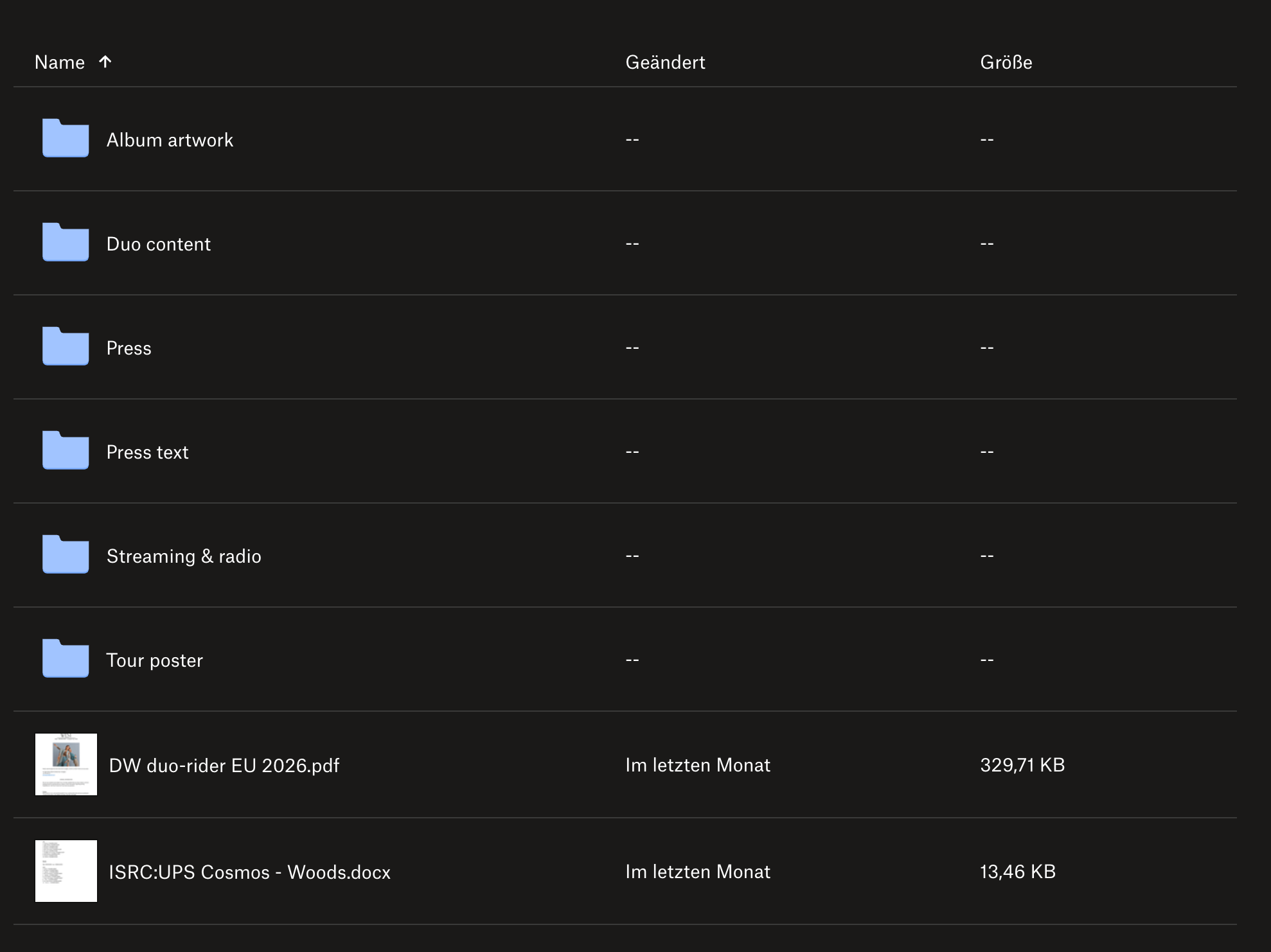
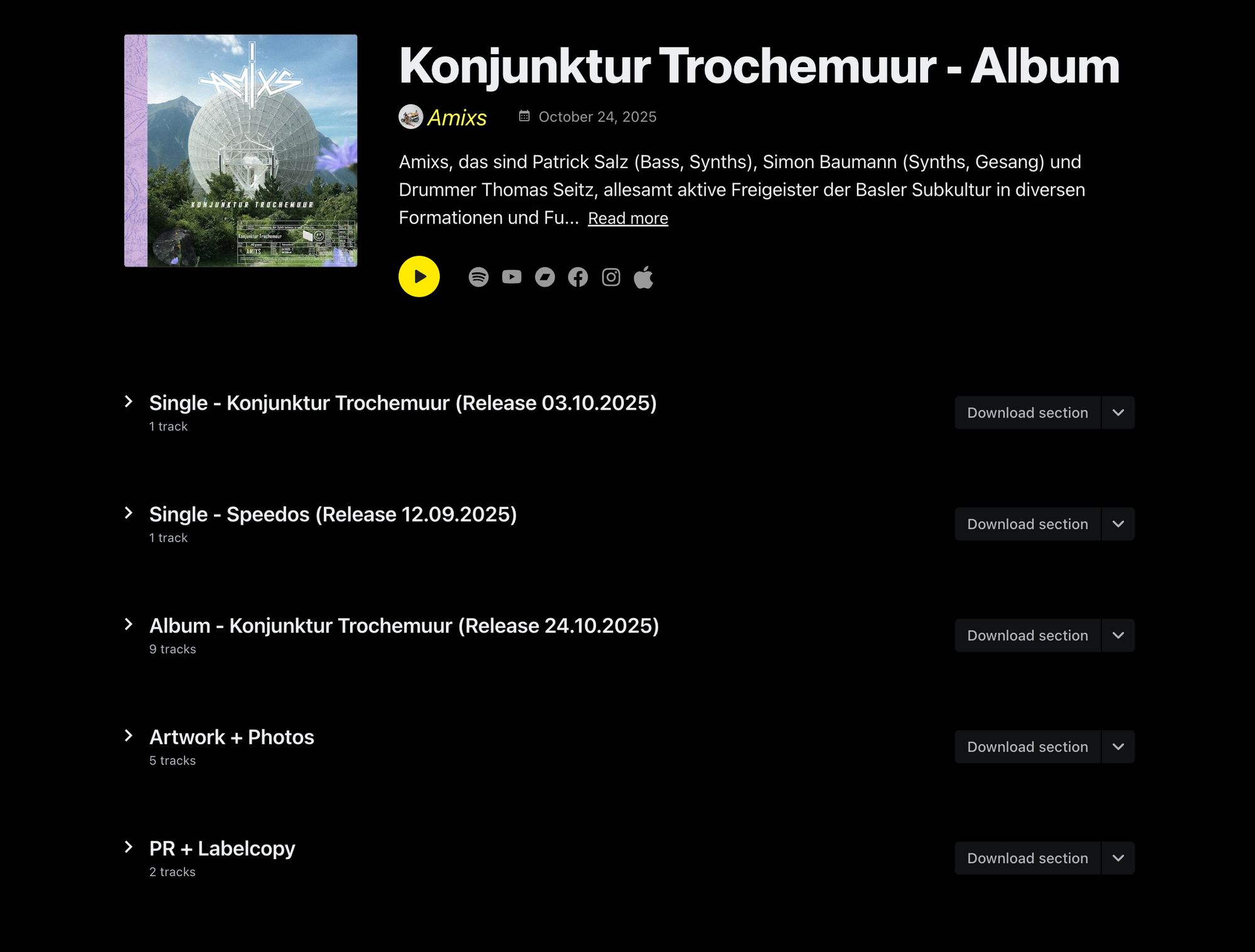
The EPK is the actual core of the sampling process. You can use specialised tools like DISCO or PromoJukeBox, as well as cloud storage products such as Dropbox or Google Drive. Both can be successful if used wisely. It is essential when using a cloud storage solution to utilise the folder function.
Here are some positive examples:
Curation vs. Scattergun Approach
Of course, effective promotion involves more than just a clear email and a rich EPK. Something that often seems to be forgotten is the curation of recipients. It applies to labels, PR agencies and independent artists who do their own promotion.
Does the publication publish news at all? Does it cover this style? Which artists have already been featured? This minimal research helps make promotions more targeted, efficient, and effective. Indeed, the scattergun approach is easy and appears to cost nothing.
But, at least in my case, when I regularly receive promotions that are pretty unsuitable for Negative White, I consistently block the sender because there’s plenty of other new stuff out there. Again, the main focus lies in efficiency, with less noise cluttering my inbox and valuable inputs worth considering at the heart of this policy.
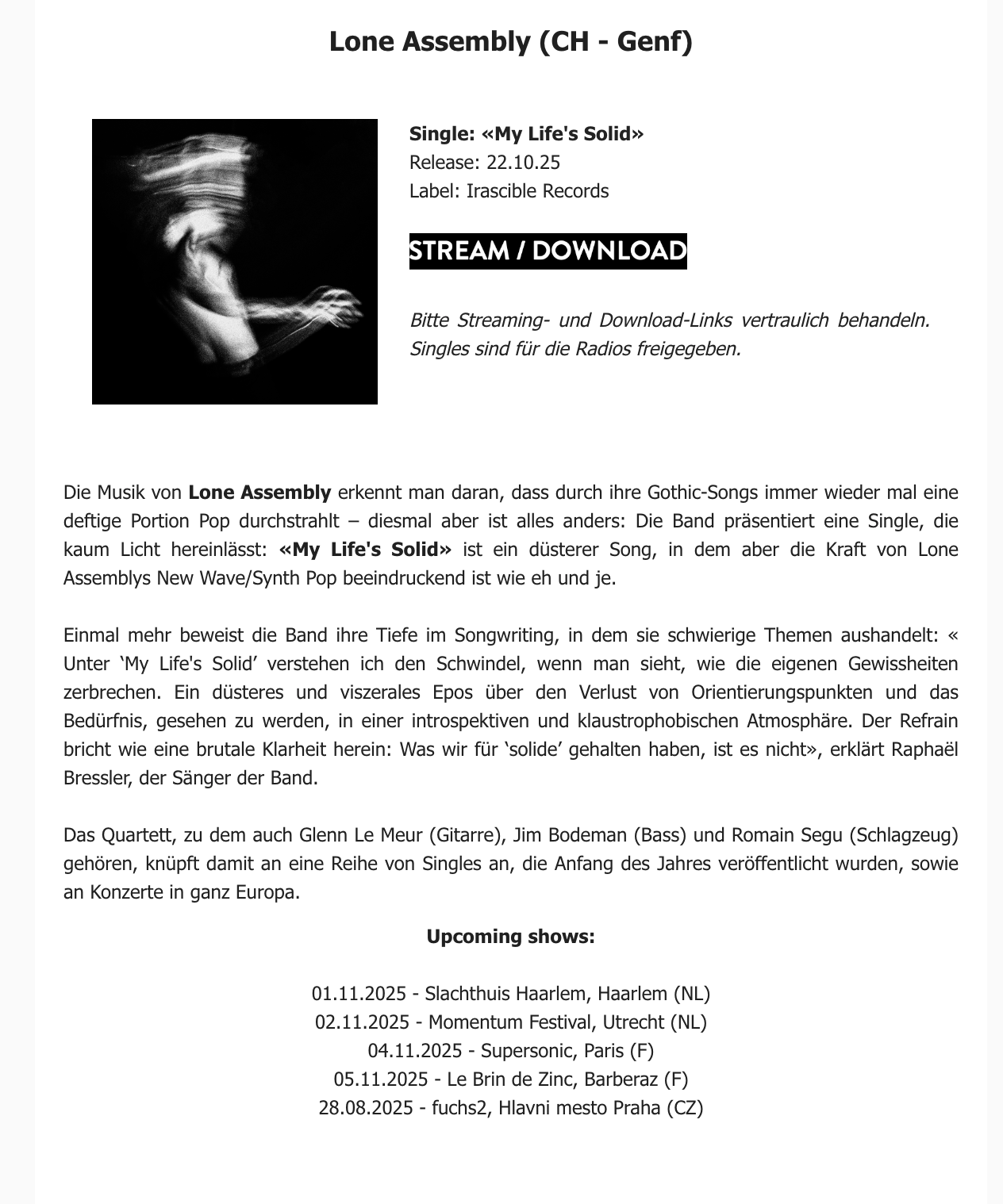
Summary Formats
Something I personally appreciate is a summary newsletter from labels, which provides all releases at a glance in one email. Of course, the same rules apply here as for individual promotion.